Style without overspending
Small Bathroom Lighting Ideas That Make the Room Feel Expensive
Use warm LED layers, a backlit mirror, dark finishes, clear glass, and controlled greenery to make a small bathroom feel richer without overcrowding it.
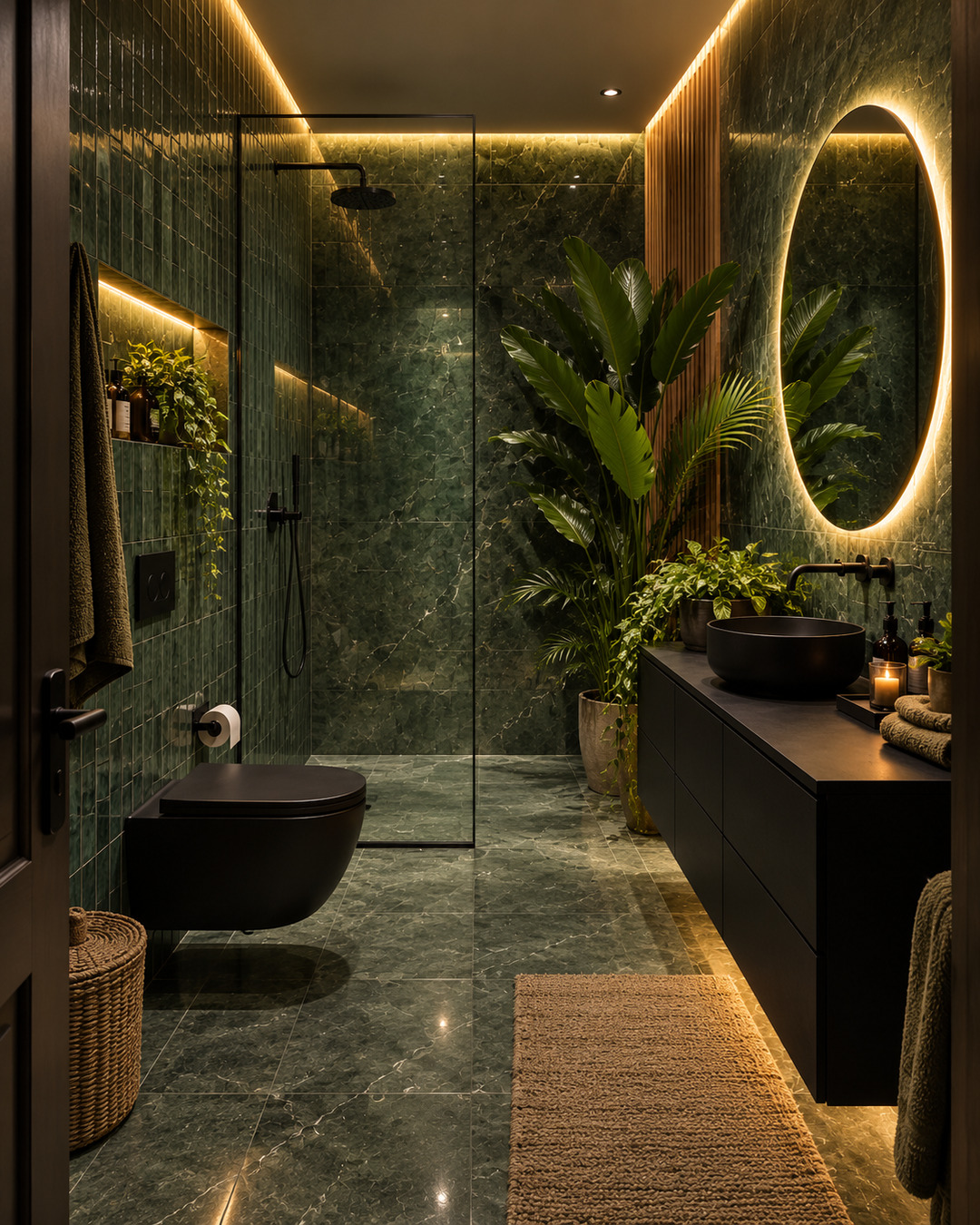
A small bathroom can feel expensive when the light is planned before the decoration. The room does not need many accessories. It needs warm layers, clean reflections, moisture-safe fixtures, and a few repeated finishes that make the space feel intentional. The strongest look usually comes from one illuminated focal point, one rich surface, and enough negative space for the lighting to breathe.
Distinguish mirror atmosphere from task lighting
Planning examples below are illustrative, not product tests or current price quotes.
Check your face rather than the halo
A backlit mirror can produce an attractive outline while leaving shadows on the face. With the existing lights, stand where you shave or apply makeup and note the shadows under the eyes and chin. Check from the normal distance, not only while standing in the doorway. Plan task light for that activity before choosing another decorative light layer.
Record three separate constraints
Write down the mirror outline, the door or cabinet movement and the location in which the electrical product would be installed. A wider mirror can crowd wall lights; a deeper cabinet can shade the face. Location ratings and installation requirements must come from the exact product and applicable requirements, not from the appearance of a room image.
Choose what to improve first
If the face is poorly lit, compare suitable task lighting. If navigation at night is the problem, compare an appropriate low-level solution. If both tasks already work, backlighting is a style choice. Keep those goals separate so a new mirror does not become an expensive attempt to fix the wrong problem.
Start with the mirror as the main light feature
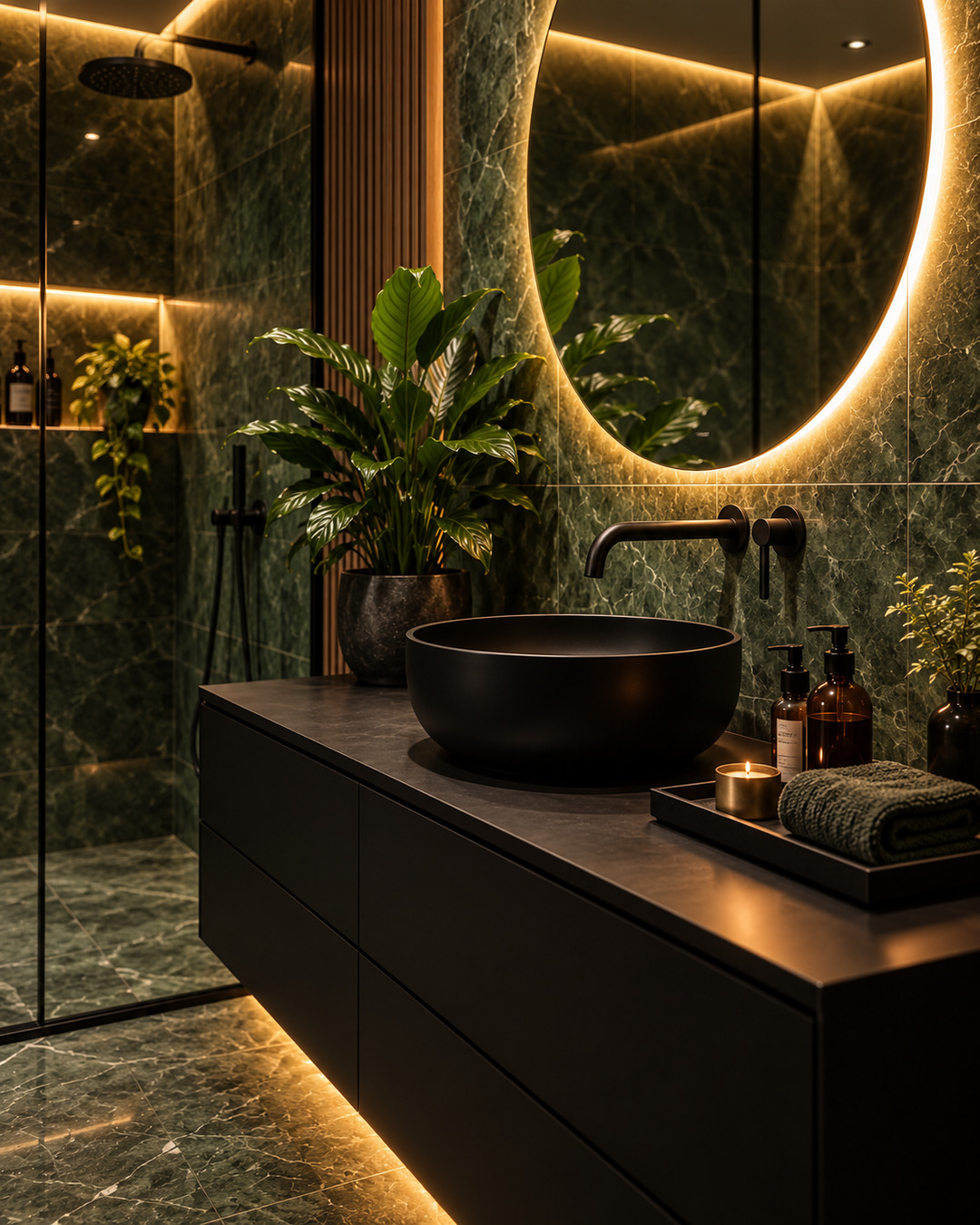
In a small bathroom, the mirror is often the largest object at eye level, so it should do more than reflect the sink. A backlit mirror gives the wall a soft glow, makes the room feel deeper, and creates a calmer look than a harsh overhead bulb. The best result is an even halo around the mirror, not visible LED dots or a cold blue-white shine.
Use LED strips to outline architecture, not clutter
LED strips look best when they are hidden behind edges, under floating pieces, or along a recessed line. In a compact bathroom, they can make the ceiling, vanity, shower niche, or floor edge feel designed. Avoid running exposed strips across open walls. The light should appear to come from the room itself, not from a visible cable.
Keep the shower glass clear and minimal
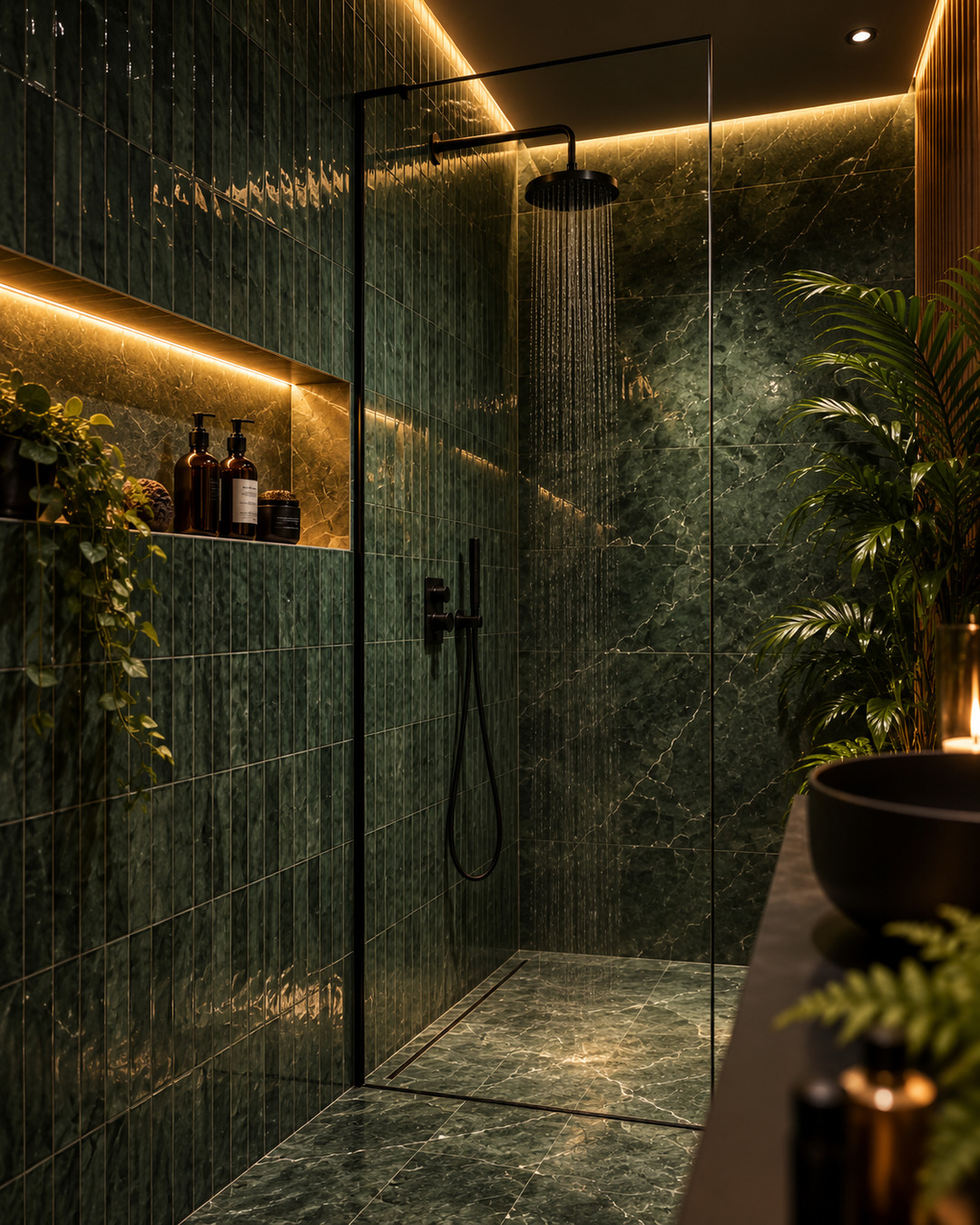
A glass shower panel helps the eye travel through the whole room, which is important when the floor area is limited. Clear glass also lets the wall tile and warm lighting continue visually into the shower. If the shower frame, handle, or hardware is too bulky, the bathroom can feel divided into smaller pieces.
Repeat one dark finish instead of mixing many metals
Matte black works well in a green or warm neutral bathroom because it gives the room structure. Repeat it on the faucet, shower fixture, mirror detail, vanity hardware, or accessories. The repetition matters more than the price of each piece. Too many finishes in a small bathroom can make the design feel accidental.
Use dark green tile carefully
Dark green tile can feel rich, calm, and dramatic, but it needs warm light and visual breaks. Use it where it can become the main surface, then balance it with glass, a simple ceiling, a clean vanity, or a mirror. If every surface is dark and heavily patterned, the room can become heavy instead of luxurious.
Add light under the vanity for depth
A soft glow under a floating vanity can make a small bathroom feel lighter because the cabinet appears to lift off the floor. This is especially useful when the vanity is black or very dark. Keep the glow subtle and continuous. The goal is depth, not a bright strip that competes with the mirror.
Control the vanity surface
Luxury in a small bathroom is often about restraint. Keep the sink area clear enough to wipe easily, then use one tray for soap, skincare, or a candle-style accent. A black vessel sink, a slim faucet, and two or three well-chosen items can look stronger than a countertop filled with products.
Use a shower niche instead of loose bottles
A recessed niche keeps shampoo and shower products from spreading across the floor or ledges. If the niche has a warm waterproof light, it becomes part of the design instead of just storage. Keep the products edited and use matching or quiet-toned bottles if the niche is very visible.
Add plants where they look intentional
Plants can soften dark tile and black fixtures, but they should not block the sink, shower entrance, or cleaning access. Use one larger plant in a corner or two smaller humidity-tolerant plants on shelves. Artificial plants can work visually if the bathroom has no natural light, but they still need regular dusting.
Avoid cold daylight bulbs
Cold bulbs can make green tile look flat and black fixtures look harsh. Warm bulbs create a more relaxed, spa-like atmosphere and flatter natural materials. Keep the color temperature consistent across the mirror, ceiling, vanity, and niche lighting so the room does not feel patchy.
Make the lighting practical for real routines
A bathroom still needs enough clear light for shaving, skincare, cleaning, and makeup. Use the warm decorative layers for atmosphere, then add balanced task lighting around the mirror if needed. A dimmer can help the same room work for morning routines and evening relaxation.
Plan safety before buying the look
Bathrooms are wet rooms, so the most beautiful lighting plan still has to be safe. Check IP ratings, bathroom zones, ventilation, wiring, and installation requirements before purchasing LED strips, mirrors, or wall lights. Decorative products should never be placed where steam, splashes, or heat can make them unsafe.
The takeaway
A small bathroom feels expensive when the light is warm, layered, and controlled. Build the design around one backlit mirror, repeat matte black details, let green tile become the rich surface, keep the glass and vanity clean, and use bathroom-safe lighting in every wet zone. The result is not more decoration; it is a tighter lighting plan that makes every material look better.
Keep the guide close
Save all 12 ideas for your next home reset.
Keep this visual guide nearby and return when you are ready to make one simple, useful change at a time.
Save on Pinterest

Keep exploring